
Problem First, Technology Second
Dr Wanli Min on Industrial AI
1h 24mSeason 3
Guest: Dr Wanli Min, North Summit Capital
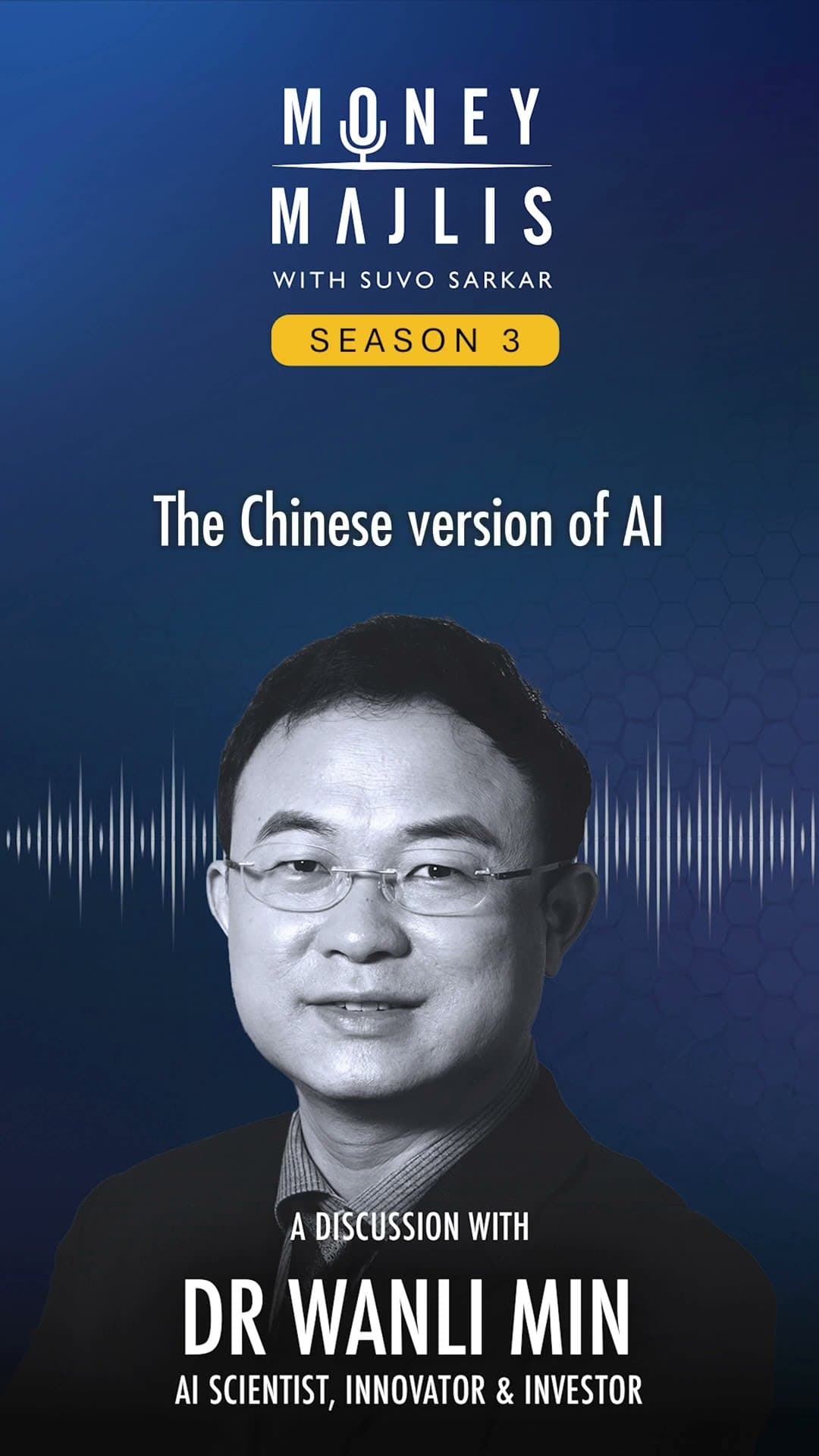
Guest bio
- Founder and CEO of North Summit Capital, investing in technology-enabled transformation of asset-heavy industries.
- University of Chicago-trained statistician; worked at IBM and Google, then Chief Machine Intelligence Scientist at Alibaba Cloud.
- Helped build Alibaba's City Brain, using AI to run traffic signals, ambulance green waves and city heating systems.
Dr Wanli Min is the founder and CEO of North Summit Capital, which invests in technology-enabled transformation across asset-heavy industries. A statistician trained at the University of Chicago, he worked at IBM and Google before joining Alibaba, where he was Chief Machine Intelligence Scientist at Alibaba Cloud and helped build City Brain, the platform that uses AI to manage city traffic signals, emergency routes and infrastructure. City Brain's work includes improving Hangzhou's traffic congestion rankings and cutting energy use in Jinan's citywide heating system by 15 percent. His approach to AI is summed up in a simple rule: problem first, technology second.
Show notes
What happens when artificial intelligence moves beyond the screen and begins to reshape the physical world? In this compelling episode of Money Majlis, host Suvo Sarkar is joined from China by Dr Wanli Min, founder and CEO of North Summit Capital and former Chief Machine Intelligence Scientist at Alibaba Cloud. Together, they explore the rapidly evolving frontier where AI meets roads, factories, ports, energy systems, logistics networks and the everyday machinery of modern cities.
Dr Min brings an unusually broad perspective to the conversation. A statistician trained at the University of Chicago, he has worked at IBM, Google and Alibaba, helped build the pioneering City Brain platform, and now invests in technology-enabled transformation across asset-heavy industries. His central proposition is clear: meaningful AI value is not created by fashionable technology alone. It emerges from identifying the right problem, securing the right data, combining algorithms with deep domain knowledge, and working with customers prepared to change how they operate.
The discussion examines how City Brain moved beyond simply displaying traffic information to influencing real operational outcomes. Dr Min explains how AI can actively manage traffic signals, create “green waves” for ambulances, reduce congestion and improve emergency response. He shares examples from Hangzhou, where City Brain helped significantly improve traffic congestion rankings, and from Jinan, where AI optimisation of a citywide heating system reduced energy consumption by 15 percent, lowering both costs and emissions.
For the GCC, the lessons are especially relevant. As Dubai, Abu Dhabi, Riyadh and NEOM invest in smart infrastructure, logistics, advanced manufacturing and new urban models, Dr Min argues that smaller, measurable pilots are often more effective than overly ambitious programmes. Strong governance, public trust, data privacy, senior sponsorship and coordination across government agencies are as important as technical capability.
The episode also provides a practical framework for bankers, investors and corporate leaders. Dr Min outlines how he assesses AI ventures: is there a meaningful problem to solve, sufficient and relevant data, a customer willing to deploy, and the domain expertise required to make the solution work? He also offers a candid view on humanoid robots, warning that captivating demonstrations must ultimately be tested against safety, commercial viability and real-world application.
The conversation considers China’s industrial AI ecosystem, the future convergence of language-based and physical-world AI, and the capabilities tomorrow’s leaders will need. Dr Min’s enduring message is simple but powerful: problem first, technology second. The greatest AI opportunity may lie not in the cloud, but where algorithms meet human judgement, operational data and the physical economy.
Dr Min recommends the following book for AI practitioners: AI Driven Leader by Geoff Woods. Details here.
Comments
Loading comments…